Sunday, October 26, 2008
pediatric nursing and development questions
Posted by
Trina Eagal
at
3:43 PM
5
comments
Thursday, October 23, 2008
Nursing 7 resources
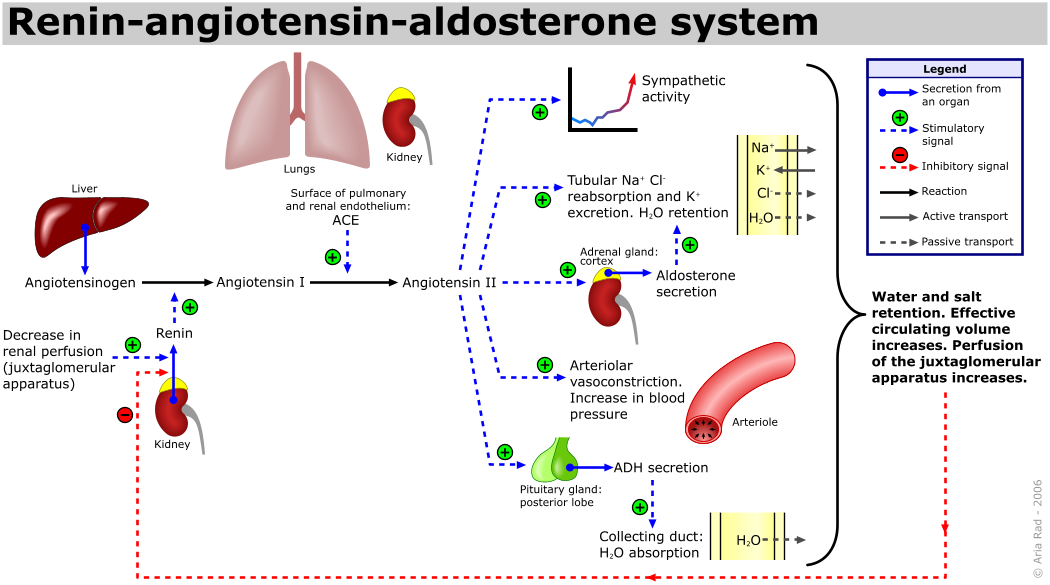
Note: the author's starting point on the diagram is a decrease in renal perfusion, but -- in his/her notes -- points out there are other ways RAAS can be activated -- "...by a low NaCl concentration in the macula densa or by sympathetic activation."
Be sure to scroll down for all the Nursing 7-related information. There are lots of other good posts by Trina and others, like Bonnie's links to information on hemodynamic basics or links to videos to refresh your clinical skills, next to the Starbucks IV bag below. Drink it up, y'all!
Posted by
Mother Forker
at
8:30 AM
0
comments
Labels: clinical skills, hemodynamics, nursing 7, RAAS, test bank
Wednesday, October 8, 2008
more shock
a. Manage fluid overload
b. Manage increased CO
c. Manage inadequate tissue perfusion
d. Manage vasoconstrxn of vascular beds
2. Which nursing assessment finding indicates hypovolemic shock in a pt who has had a 15% blood loss?
a. Pulse <> 30mL/hr
b. Systolic bP > 110
c. Diastolic > 90
d. RR of 20 braeths/min
4. which is a risk factor for hypovolemic shock?
a. Hemorrhage
b. Antigen antibody rxn
c. Gram neg bacteria
d. vasodilation
5. what is a priority assessment for the pt in shock who is receiving an IV infusion of PRBC and NS?
a. Fluid balance
b. Anaphylactic rxn
c. Pain
d. ALOC
6. the pt who does not respond adequately to fluid replacement has an order for an IV infusion of dopamine hydrochloride at 5u/kg/min. the desired fx of the drug is
a. increased renal and mesenteric BF
b. increased CO
c. vasoconstrx
d. reduced preload and afterload
7. A male pt who has been taking coumadin has been admitted c severe acute rectal bleeding and the following lab results: INR 8, Hmg 11, hematocrit 33%. Which MD orders would the nurse expect to implement initially? Select all that apply.
a. IV D5 ½ NS
b. Schedule pt for sigmoidoscoy in the AM
c. Give 1 unit FF plasma
d. Admin vitamin K 2.5 mg PO
e. Begin polyethylene glycol-electrolyte solution in preparation for signoidoscopy
f. Admin fleet’s enema
8. the nurse in perop holding area keeps a pt c gastric bleeding in a dimly lit environment c one family member present. What is the primary rationale for these nursing interventions?
a. Stabilize fluid and lyte balance
b. Minimize O2 consumption
c. Increase pt and family comfort
d. Prevent infxn
9. when assessing a pt for early septic shock, the nurse observes for which of the following?
a. Cool clammy skin
b. Warm flushed skin
c. Decreased systolic bp
d. hemorrhage
10. a pt c toxic shock has been receiving ceftriaxone sodium, in add’n to culture and sensitivity studies. What other lab finding does the nurse monitor?
a. Serum creat
b. Spinal fluid analysis
c. ABG
d. Serum osmolality
11. what intervention is most important in preventing septic shock?
a. Admin IV fluid replacement therapy as orderd
b. Obtaining VS q 4 hrs for all pts
c. Monitoring RBC counts for elevation
d. Maintaining asepsis of indwelling urinary catheters
12. which is a indication of a complication of septic shock?
a. Anaphylaxis
b. ARDS
c. COPD
d. Mitral valve prolapse
Posted by
Trina Eagal
at
9:21 PM
1 comments
Sunday, October 5, 2008
Congenital Heart Defects
There are also some handy little animations of blood flow through various defects on our textbook's CD for chapter 48.
Posted by
Mother Forker
at
11:58 AM
0
comments
Thursday, October 2, 2008
Posted by
Maureen D.
at
7:36 AM
0
comments
Wednesday, October 1, 2008
Shock it to me!!

a. neurogenic
b. hypovolemic
c. respiratory
d. metabolic
5. For every unit of blood lost in trauma, how much crystalloid must be infused?
a. twice as much
b. equal amount
c. half as much
d. three times the amount
6. Which drug is a parasympathetic antagonist?
a. lidocaine
b. atropine
c. digoxin
d. dopamine
7. A heat exhaustion patient is suffering from what type of shock?
a. cardiogenic
b. neurogenic
c. hypovolemic
d. metabolic
Posted by
Trina Eagal
at
7:41 PM
1 comments
Sunday, September 28, 2008
ARDS and ABGs
a. Teach cigarette smoking cessation
b. Maintaining adequate serum K levels
c. Monitoring pts for signs of hypercapnia
d. Replacing fluids, adequately during hypovolemic states
2. Which ND would be a priority for a pt c ARDS?
a. Ineffective breathing pattern
b. Pain
c. Ineffective health maintenance
d. Risk for infxn
3. Early sign of ARDS in a pt at risk?
a. Elevated CO2 level
b. Hypoxia not responsive to O2
c. Metabolic acidosis
d. Severe, unexplained lyte imbalance
4. pH 7.52, PaO2-50, PaCO2-28, HCO3-24
a. hypoxemia
b. hypoventilation
c. hyperventilation
d. o2 toxicity
5. Same condition as above, which conclusion accurate?
a. Pt severely hypoxic
b. O2 low but poses no risk for pt
c. Pt’s paO2 c/in normal range
d. Pt requires O2 c very low O2
6. same condition, possible cause?
a. COPD
b. DKA c kussmaul’s
c. MI
d. PEmbolus
7. which intervention should the nurse anticipate in a pt c ARDS?
a. Tracheostomy
b. Intermittent positive pressure breathing
c. Mechanical vent
d. Insertion of a chest tube
8. Which condition can put a pt at risk for ARDS?
a. Septic shock
b. COPD
c. Asthma
d. HF
9. which assessment would be most appropriate for determining correct placement of ETT in a mech vent pt?
a. assess skin color
b. monitor RR
c. verify amount of cuff inflation
d. auscultate lung sounds bilaterally
10. which nursing intervention would promote effective airway clearance in a pt c ARD?
a. Administer O2 q 2hrs
b. Turn pt q 4hrs
c. Admin sedatives
d. Sxning if cough ineffective
11. which is a complication associated c mechanical ventilation?
a. GI hemorrhage
b. Immunosuppression
c. Increased CO
d. P Emboli
12. The nurse would anticipate which of the following ABG results in a pt experiencing a prolonged, severe asthma attack?
a. low PaCO2, high PaO2, low pH
b. High paco2, low pao2, low pH
c. High paco2, high pao2, high pH
d. Low paco2, low pao2, high pH
13. A pt’s ABG values are as follows:
pH 7.31, paO2-80, PaCO2-65, HCO3-36
Which s/sx would the nurse expect?
a. cyanosis
b. flushed skin
c. irritability
d. anxiety
Answers in the comments section.
Posted by
Trina Eagal
at
4:01 PM
2
comments
Labels: exam 4 nursing 7, respiratory
Tuesday, September 23, 2008
Thursday, September 11, 2008
Memorial for one of our own
Melissa Granados
05/23/1981 — 09/05/2008
Services will be Friday for lifelong Tracy resident Melissa Granados, 27, who died Sept. 5 in a car accident that also led to the death of her 5-year-old son, Ayden Weaver. Ms. Granados was born in Tracy and lived here her entire life. She was a nursing student at San Joaquin Delta College and had received a scholarship to study nursing from the National Trucking Association’s San Joaquin County chapter. She was also involved in breast cancer awareness activities, in remembrance of her mother, Darlene, who died of the disease in 2002. Ms. Granados was also an avid San Francisco Giants and 49ers fan and enjoyed playing basketball and soccer. Ms. Granados is survived by her father, Donald Granados, of Tracy; sisters, Tricia Rittger and Staci Granados, both of Los Osos; and many aunts, uncles, nieces and nephews. She was preceded in death by her mother, Darlene Granados; and grandmother, Connie Basruto. Friday’s services, which will include a service for Ayden, will begin at 1 p.m. at Fry Memorial Chapel, 550 S. Central Ave. Burial will be private. Donations in Ms. Granados’ name may be sent to the Ayden Weaver and Melissa Granados Memorial Fund, Tracy Federal Credit Union, account No. 22363.
Published on 09/10/2008
Posted by
Trina Eagal
at
12:23 PM
1 comments
Wednesday, September 10, 2008
Heart Dz Quiz
d. Renal failure
a. morphine
d. obtain ECG
Posted by
Trina Eagal
at
5:56 PM
1 comments
Monday, September 8, 2008
CV questions
1. which of the following is a compenstory response to decreased CO?
a. decreased BP
b. ALOC
c. dec. BP & diuresis
d. inc. BP and fluid volume
2. which is used to describe the amount of stretch on the myocardium at the end of diastole?
a. afterload
b. cardiac index
c. CO
d. preload
3. one hour after administering IV lasix to a pt c HF, a short burst of Vtach appears on the monitor. which lyte imbalance should the nurse suspect?
a. hypoCa
b. HyperMg
c. hypoK
c. hyperNa
4. to reduce risk of coronary artery spasms, whicy type of med is the physicial most likely to prescribe?
a. Beta blocker
b. ACE inhibitor
c. inotropic vasodilator
d. Ca channel blocker
5. pt c HF is receivfing lasix 40mg IV. the MD orders 40 mEq KCl in 100mL D5W, to infuse over 4 hr. the pt's serum K level is 3.0. at which infusion rate should the nurse set the pump?
a. 25mL/hr
b. 10
c. 100
d. 50
6. a pt being tx'd 4 Vtach, why should teaching include eating foods such as bananas?
a. bananas high in carbs
b. high in K
c. low in Na
d. high in fiber
7. BP 126/80, MAP is
Also, links to test bank questions
med I
med II
med III
med IV
med V
Posted by
Trina Eagal
at
6:37 PM
1 comments
Labels: meds, n7 cardiac
Sunday, August 31, 2008
Swan Ganz Insertion and Waveform
This shows actual insertion of a Swan Ganz and what the waveforms look like. I don't know about you guys, but I am always pleasantly surprised when I learn something and it is actually like real life!!
Swan Ganz Insertion and Waveform
You really only need to watch 3:20-5:30 of this video.
Oh, by the way. . . it is in Spanish, which is interesting, and you kind of feel like you should be on E as you listen to it (you will know what I am talking about when you watch it).
Also, this man made a good analogy for hemodynamics.
Understanding Hemodynamics
Posted by
Trina Eagal
at
12:13 AM
0
comments
Thursday, August 28, 2008
N7 Hemodynamic Basics
Hey guys, check out this Nursing CEU site. Quick easy read with mini quizzes
Posted by
Bonnie Boss
at
5:12 PM
4
comments
Tuesday, August 26, 2008
Early bird questions
Be forewarned that there is sound on the cardiac quiz site, so check your volume!
EKG simulator
Posted by
Trina Eagal
at
4:34 PM
0
comments
Monday, August 25, 2008
Links to test banks
http://deltarnstudents.blogspot.com/2005/09/n4-test-neuro-icp-chapter-55.html
http://deltarnstudents.blogspot.com/2005/09/n4-test-head-injuries-and-icp.html
http://deltarnstudents.blogspot.com/2005/09/n4-test-cerebral-bleeding-and-icp.html
http://deltarnstudents.blogspot.com/2005/12/n4-n7-critical-care-neuro-quiz.html
http://deltarnstudents.blogspot.com/2005/12/n4-neuro-and-cranial-nerves-quiz.html
http://deltarns2007.blogspot.com/2005/10/disorders-of-fluid-volume-osmolality.html
http://deltarnstudents.blogspot.com/2005/10/n4-test-fluid-imbalances.html
http://futurenurses2008.blogspot.com/2008/04/n7-pharmacology-positive-inotropic.html
http://futurenurses2008.blogspot.com/2008/03/n7-pharmacology-antidysrhythmic-agents.html
http://futurenurses2008.blogspot.com/2008/04/n7-pharmacology-antianiginal-agents.html
http://futurenurses2008.blogspot.com/2008/03/n7-pharmacology-antihypertensive-agents.html
http://futurenurses2008.blogspot.com/2008/03/n7-pharmacology-diuretic-agents.html
Posted by
Trina Eagal
at
10:27 AM
0
comments
Labels: n7, nclex questions, test 1
Sunday, August 24, 2008
RAA system
here is a great diagram showing how the RAAS works.
thank you wikipedia!!
RAAS diagram
Posted by
Trina Eagal
at
1:27 PM
0
comments
Saturday, August 23, 2008
Nursing 6 study resources
Companion website:
There are some great resources in our textbook's companion website. Check out this link: Maternal & Child Nursing Care.
It offers printable versions of the "Critical Concept Reviews" appearing at the end of each chapter (good quick chapter reviews!), and it also provides NCLEX questions (about 10/chapter).
Here are links to the first assigned chapters:
- 33 - Growth and Development
- 34 - Nutrition
- 35 - Pediatric Assessment
- 36 - Influences on the Child
- 37 - Health Promotion and Maintenance (infancy/early childhood)
- 38 - Health Promotion and Maintenance (older child/adolescent)
- 42 - Pain Assessment and Management
For additional NCLEX practice, animations and more, see the companion CD that should have been included at the back of your textbook.
Posted by
Mother Forker
at
2:39 PM
1 comments
Wednesday, August 20, 2008
Charting Errors
These are from actual medical charts.
The baby was delivered, the cord clamped and cut and handed to the pediatrician, who breathed and cried immediately.
Exam of genitalia reveals that he is circus sized.
The skin was moist and dry.
She stated that she had been constipated for most of her life until 1989 when she got a divorce.
The patient lives at home with his mother, father, and pet turtle, who is presently enrolled in day care three times a week.
Bleeding started in the rectal area and continued all the way to Los Angeles.
Both breasts are equal and reactive to light and accommodation.
She is numb from her toes down.
While in the emergency room, she was examined, X-rated and sent home.
The lab test indicated abnormal lover function.
Occasional, constant, infrequent headaches.
Examination reveals a well-developed male lying in bed with his family in no distress.
Patient was alert and unresponsive.
When she fainted, her eyes rolled around the room.
Posted by
Trina Eagal
at
4:14 PM
1 comments
Labels: charting errors
Thursday, August 14, 2008
Nursing 7 Lecture Audio
Posted by
Trina Eagal
at
9:24 PM
1 comments
Labels: nursing 7 lecture audio
Wednesday, August 13, 2008
Revving back up
Student Nurse Journey is a great general site you might want to peruse. You'll see there are lots of good resources there. Among many other bits of relevant information, it offers nursing fundamentals videos on many basic skills, such as:
Other areas of interest on the site include:
- Pediatric nursing
- Med-surg topics (by body system)
- Assessments
- Writing, charting and reporting
- Medications (classes, administration, etc.)
- Care plans
Posted by
Mother Forker
at
1:29 AM
3
comments